Building “Ah”: How a Solo Developer Used AI to Create a Thai Language Learning App
Learning a new language is rarely a straightforward journey, especially when you step outside the structured environment of a classroom. Without a community of native speakers around you, the daily immersion required to truly grasp a language is often missing. This is a common hurdle for independent learners, and it was exactly the challenge Melanie faced when she began learning Thai.
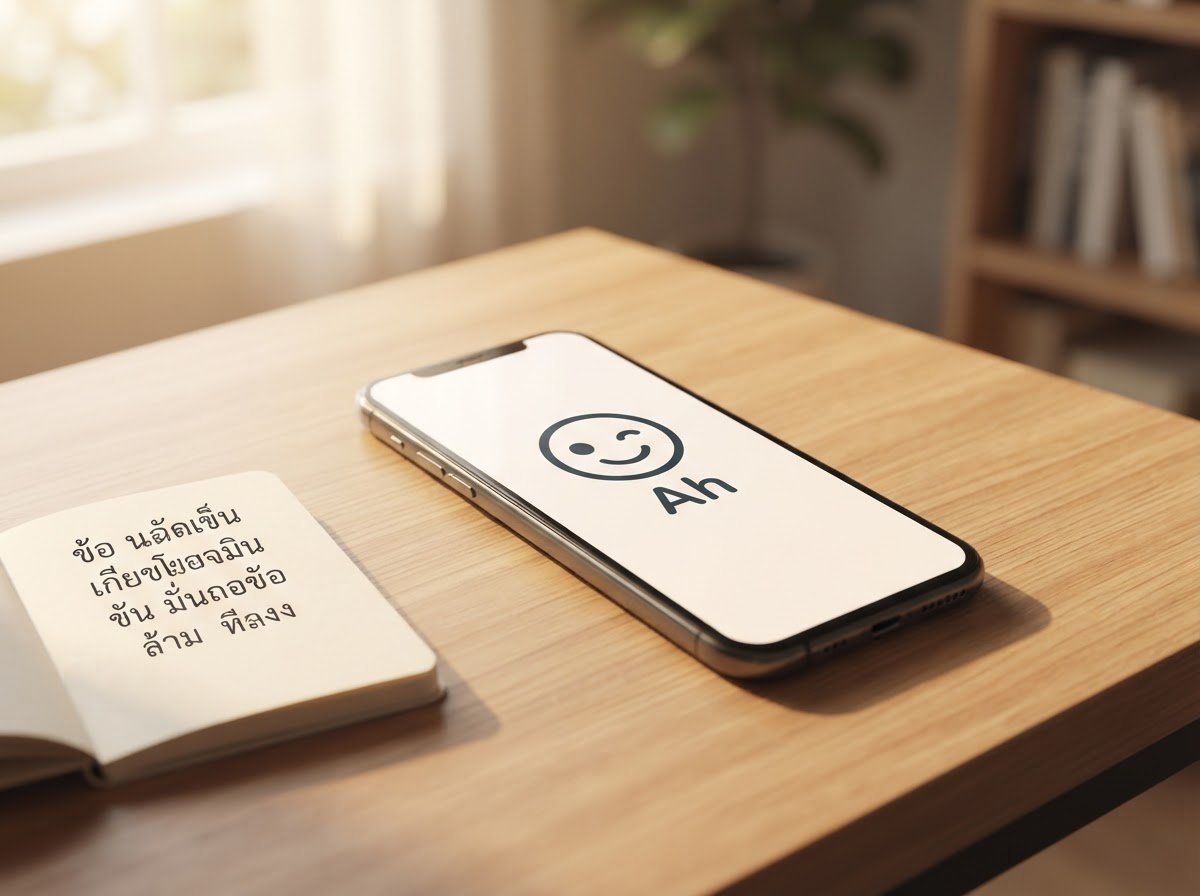
To bridge the gap between her desire to learn and the lack of accessible daily practice, she decided to build her own solution: a language learning assistant app called “Ah.” The name—inspired by the universal sound of sudden understanding—and its cute, face-like logo represent the joy of learning something new.

But Melanie’s project is more than just a language app. It is a practical demonstration of how a solo developer with limited coding experience can leverage artificial intelligence and cloud computing to build a functional, personalized educational tool from scratch.
The Core Problem with Traditional Language Learning
When learning a language independently, students typically run into three major roadblocks. First, there is an inability to clock enough hours of meaningful practice. Without a conversation partner readily available, it is difficult to build the muscle memory required for fluency. Second, learners suffer from a lack of cultural exposure. Language is deeply intertwined with culture, and simply memorizing vocabulary flashcards rarely provides the context needed to understand how native speakers actually communicate. Finally, self-guided learning often lacks one-to-one feedback, meaning pronunciation and contextual errors can go uncorrected for months.
Melanie wanted to solve these exact problems. Her goal was to help people confidently understand and use a new language through authentic content, personalized guidance, and, most importantly, the development of a daily habit. She envisioned an app that went beyond direct translation, incorporating cultural elements like songs, an “AI Word Explorer” to break down complex Thai compound words, and an AI pronunciation checker.
Prototyping with AI as a Non-Professional Coder
At the time she conceived “Ah,” Melanie was interested in user experience (UX) design, hoping to break into product management, and eager to expand her technical expertise. However, she was not a professional coder. To overcome this technical barrier, she turned to ChatGPT.

Using a brute-force, learn-as-you-go approach, she relied on generative AI to act as her pair programmer. She started by designing wireframes to visualize the app’s user interface, focusing on features like spaced-repetition flashcards and a daily learning companion. When it came time to build the backend, she prompted ChatGPT to write Python code that could generate a randomized list of Thai vocabulary words.
This AI-assisted prototyping allowed her to quickly spin up a minimum viable product (MVP). Instead of getting bogged down in the syntax of a programming language she was still learning, she could focus on the logic, architecture, and user experience of her application.
Automating the Habit with Cloud Architecture
A crucial component of Melanie’s vision was daily repetition. To build a habit, the app needed to reach the user where they already were. She decided to deliver the vocabulary words three times a day via Telegram, a popular messaging app.
Initially, she ran the Python script locally on her own computer. However, she quickly learned a fundamental lesson in system architecture: when her computer went to sleep, the script stopped running, and the daily words were never sent.
To solve this, she transitioned to the cloud. Having recently taken an AWS Certified Solutions Architect Associate course, she utilized her free trial to deploy the application on Amazon Web Services. She uploaded her AI-generated Python code to AWS Lambda—a serverless compute service that runs code in response to events—and used Amazon EventBridge to trigger the function automatically at specific times, such as 9:00 a.m. every day. This ensured that her Telegram bot reliably delivered daily practice prompts, allowing her to engage with the language in quick, manageable bursts right from her phone.
Community Feedback and the Future Roadmap
Presenting her MVP to a community of tech enthusiasts opened the door to valuable feedback and suggestions for the app’s future roadmap.
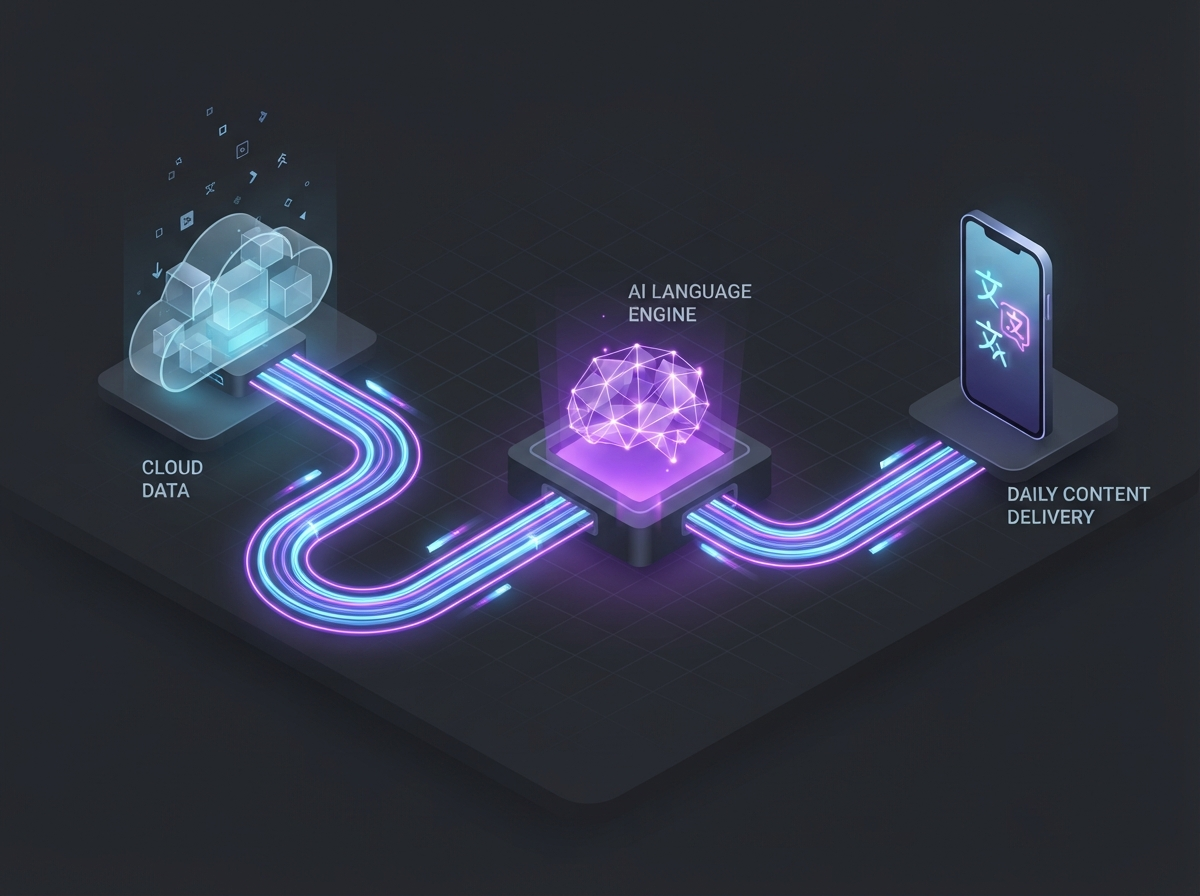
One significant suggestion was to integrate Large Language Models (LLMs) to move beyond randomized vocabulary lists. By connecting the app to an API from providers like OpenAI, the bot could generate interactive, ongoing storytelling—like a serialized drama—using the day’s vocabulary. This contextual learning hooks users much more effectively than isolated sentences.
Other developers suggested exploring simpler backend alternatives. While AWS is incredibly powerful, it can be overly complex for a simple Telegram bot. Alternatives like Railway for easy deployment and Convex for database management were recommended to reduce technical overhead, though Melanie’s use of AWS remains a fantastic learning exercise for her architectural skills. Furthermore, exploring an omni-channel experience where user sessions are saved centrally could eventually allow learners to seamlessly switch between the Telegram bot and a dedicated native app.
The Empowering Reality of Modern Development
The journey of building the “Ah” app highlights a massive shift in how software is created today. You no longer need a computer science degree or a large development team to bring a complex idea to life. By leveraging AI assistants like ChatGPT for coding and architecture design, alongside scalable serverless tools like AWS Lambda, solo creators can rapidly prototype and deploy highly personalized solutions to their own everyday problems.
Melanie’s project is a testament to the power of learning by doing. Whether she scales “Ah” into a multi-language platform on the App Store or simply uses it as a stepping stone in her product management career, the foundation is already built—one AI-generated line of code at a time.

Building "Ah": How a Solo Developer Used AI to Create a Thai Language Learning App
Learning a new language is rarely a straightforward journey, especially when you step outside the structured environment of a classroom. Without a community of native speakers around you, the daily immersion required to truly grasp a language is often missing. This is a common hurdle for independent learners, and it was exactly the challenge Melanie faced when she began learning Thai.
To bridge the gap between her desire to learn and the lack of accessible daily practice, she decided to build her own solution: a language learning assistant app called "Ah." The name—inspired by the universal sound of sudden understanding—and its cute, face-like logo represent the joy of learning something new.
But Melanie's project is more than just a language app. It is a practical demonstration of how a solo developer with limited coding experience can leverage artificial intelligence and cloud computing to build a functional, personalized educational tool from scratch.
The Core Problem with Traditional Language Learning
When learning a language independently, students typically run into three major roadblocks. First, there is an inability to clock enough hours of meaningful practice. Without a conversation partner readily available, it is difficult to build the muscle memory required for fluency. Second, learners suffer from a lack of cultural exposure. Language is deeply intertwined with culture, and simply memorizing vocabulary flashcards rarely provides the context needed to understand how native speakers actually communicate. Finally, self-guided learning often lacks one-to-one feedback, meaning pronunciation and contextual errors can go uncorrected for months.
Melanie wanted to solve these exact problems. Her goal was to help people confidently understand and use a new language through authentic content, personalized guidance, and, most importantly, the development of a daily habit. She envisioned an app that went beyond direct translation, incorporating cultural elements like songs, an "AI Word Explorer" to break down complex Thai compound words, and an AI pronunciation checker.
Prototyping with AI as a Non-Professional Coder
At the time she conceived "Ah," Melanie was interested in user experience (UX) design, hoping to break into product management, and eager to expand her technical expertise. However, she was not a professional coder. To overcome this technical barrier, she turned to ChatGPT.
Using a brute-force, learn-as-you-go approach, she relied on generative AI to act as her pair programmer. She started by designing wireframes to visualize the app's user interface, focusing on features like spaced-repetition flashcards and a daily learning companion. When it came time to build the backend, she prompted ChatGPT to write Python code that could generate a randomized list of Thai vocabulary words.
This AI-assisted prototyping allowed her to quickly spin up a minimum viable product (MVP). Instead of getting bogged down in the syntax of a programming language she was still learning, she could focus on the logic, architecture, and user experience of her application.
Automating the Habit with Cloud Architecture
A crucial component of Melanie's vision was daily repetition. To build a habit, the app needed to reach the user where they already were. She decided to deliver the vocabulary words three times a day via Telegram, a popular messaging app.
Initially, she ran the Python script locally on her own computer. However, she quickly learned a fundamental lesson in system architecture: when her computer went to sleep, the script stopped running, and the daily words were never sent.
To solve this, she transitioned to the cloud. Having recently taken an AWS Certified Solutions Architect Associate course, she utilized her free trial to deploy the application on Amazon Web Services. She uploaded her AI-generated Python code to AWS Lambda—a serverless compute service that runs code in response to events—and used Amazon EventBridge to trigger the function automatically at specific times, such as 9:00 a.m. every day. This ensured that her Telegram bot reliably delivered daily practice prompts, allowing her to engage with the language in quick, manageable bursts right from her phone.
Community Feedback and the Future Roadmap
Presenting her MVP to a community of tech enthusiasts opened the door to valuable feedback and suggestions for the app's future roadmap.
One significant suggestion was to integrate Large Language Models (LLMs) to move beyond randomized vocabulary lists. By connecting the app to an API from providers like OpenAI, the bot could generate interactive, ongoing storytelling—like a serialized drama—using the day's vocabulary. This contextual learning hooks users much more effectively than isolated sentences.
Other developers suggested exploring simpler backend alternatives. While AWS is incredibly powerful, it can be overly complex for a simple Telegram bot. Alternatives like Railway for easy deployment and Convex for database management were recommended to reduce technical overhead, though Melanie's use of AWS remains a fantastic learning exercise for her architectural skills. Furthermore, exploring an omni-channel experience where user sessions are saved centrally could eventually allow learners to seamlessly switch between the Telegram bot and a dedicated native app.
The Empowering Reality of Modern Development
The journey of building the "Ah" app highlights a massive shift in how software is created today. You no longer need a computer science degree or a large development team to bring a complex idea to life. By leveraging AI assistants like ChatGPT for coding and architecture design, alongside scalable serverless tools like AWS Lambda, solo creators can rapidly prototype and deploy highly personalized solutions to their own everyday problems.
Melanie’s project is a testament to the power of learning by doing. Whether she scales "Ah" into a multi-language platform on the App Store or simply uses it as a stepping stone in her product management career, the foundation is already built—one AI-generated line of code at a time.